
The nature of me
1. Suicide and Absurdity
An intolerable sensation of playing around the edges grips the suicidal person whenever they are asked to think about anything other than suicide. Friends and doctors and self-help gurus and randos on social media may advocate one or another conceptual or behavioral shunts to divert the suicidal person from their suicidal intuitions — sleep or exercise or socialization or games or reading or Netflix or sex or work or charity or gratitude or medication ad infinitum. But in the end nothing else will do. No other topic, no other focus of attention, seems to be worth the while required to engage with it. It is not that suicide exerts some physical force on them, the way others sometimes assume when they talk about the gravitational black hole sucking their thoughts away from all other matters. It isn’t like that at all. It is that suicide is the only valuable topic, the only topic worth talking about. Every other topic is so much idle chit-chat. Suicide alone — the question of whether to continue on as they are — captures their imagination.

In sensing this the suicidal person Suicide is the only “serious The Myth of Sisyphus famously said that suicide was suicide was the
2. The Hodge-Podge
For a long time we — the human species in general, and those who suffer psychological pain in particular — have yearned for a unified theory of the brain-mind connection. We may not have said it this way to ourselves. We may have not said to ourselves “what I’m missing is a unified theory of brain and mind. What’s causing me pain is its absence.” We may have been only vaguely interested in the obvious truth that the brain is the seat of our mind’s pleasures and pains, its joys and sorrows, its hopes and despairs. We may have never dared to say “I wish I knew how it worked to that I could control it.”
We may have ingested caffeine when tired, and alcohol when stressed, and nicotine when unfocused, and so on in this way, the whole time vaguely realizing that we were, with these molecules, altering our brain in order to alter our mind, but we never really generalized these practices into wishing for total control over all of our mental experience — control over our self-esteem, our rejection sensitivity, our motivation. We may have accepted that where others seemed able to be use their brains to be sensible, calm, happy, happy with the world as it came to them, we lacked a certain something the self-control and self-discipline to stay happy and calm. We may have simply known that somehow or other the way our brains represented the world to us — represented threat, represented rejection, represented pleasure and pain — served to make the world scary and lonely and painful. We may have simply concluded that our brains were, somehow, off. But the moment we allowed ourselves to wish that we could alter our brains — make them less sensitive to rejection and hurt and disappointment, less prone to producing depression and anxiety and rage and stress — we allowed ourselves to wish for a unified theory of the brain-mind connection. Because to wish to feel better by altering the brain is to wish to understand how the brain works. And once one wishes to know how the brain works it is a slippery slope. It may be enough to know a little trick here and there — to take caffeine when we are sleepy, alcohol when we are stressed — but more often tricks are not enough. Where a small amount of knowledge is good, more is better, and complete knowledge — a complete understanding of how the brain makes the mind, which is to say a unified theory — is best. When it comes to mental suffering, half-measures often will not do. What is needed is a total theory. And so, even if we never quite put it so broadly, we have known for a long time that we needed to know how brains made minds, why they made them, and how we might alter brains to make our minds more tolerable, and even joyous, to have.
That. We have known that untold happiness might await us if we could better control the organ that both tormented and delighted us. But without a unified theory of mental experience we knew this would be hard to do.
“Unified theory” sounds pretentious, but it’s not. Pilots have unified theories of planes — wings create higher pressure below than above them, allowing flight — that guide all their decisions when facing that wall of dials and switches and levers we’ve all seen in the cockpit. Without that theory all those controls make no sense.

A unified theory of football — score more than the other team! — helps a coach choose which, of hundred of plays, to run at any given point in the game.
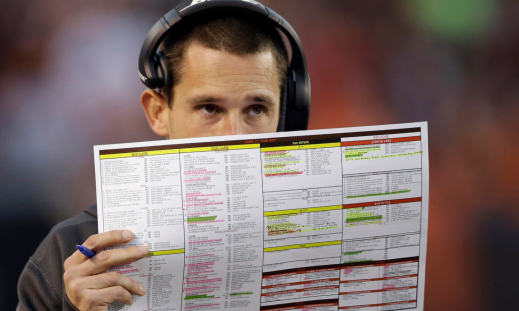
We looked with envy upon the marvelously simple unified theories that other branches of medicine had devised for the body’s other organs. The unified theory of the heart — it’s a pump! — explains a vast range of symptoms that were once mysterious: shortness of breath, swollen feet, difficulty climbing stairs, lightheadedness when standing up suddenly, tingling down the left arm, chest pain. They are all understandable, despite their diversity, when you understand what the heart does and how it does it. Same goes for the lungs — they exchange oxygen for carbon! — and the liver — it’s a filter! And so on. One after another the organs of the body revealed their secrets to modern medicine, and the benefit to patients was astounding. Diseases that had killed their ancestors became mild inconveniences, afterthoughts, historical foot notes.
But not so the brain, and not to the mind it seemed to produce. It was not that we didn’t know anything the brain did. On the contrary, it seemed to do so much! It feels! It thinks! It decides! It acts! It makes moral decisions, engages in social exchange, makes plans, fulfills duties, falls in love, goes to war. But this profusion of capacities always seemed too broard, too unwieldy. It was a list of capacities, but the list seemed too long. Surely there was a single overarching purpose to the brain of which all these capacities were particular manifestations. Surely thought and feeling and planning and action had something deeper in common. And surely that deeper thing, once known, would give us vastly expanded powers to diagnose and treat mental suffering: depression, anxiety, rage, addiction, self-hatred.
But wishing for a unified theory doesn’t create a unified theory. You have to build one. And so we began to build. Over thousands of years we cobbled together a fragmentary, internally contradictory, lacuna-filled hodge-podge of theories about how the brain and mind worked. It’s a mishmash of models with a whole bunch of intuitions, factoids and observations thrown in, and the best we could do. We were monkeys only recently down from our trees. There was nobody to help us — we had to think for ourselves, starting from scratch. And so, like the authors of any first draft, as the years went by we accumulated a large, unwieldy amount of mutually incompatible ideas.
In philosophy we came up with our phenomenological, existential, panpsychic, dualistic, functionalist, and materialist (among many others) models of the human mind. In psychology we came up with cognitive, behavioral, moral, developmental, social, integral, and clinical psychology. In politics and religion we learned to justify our frameworks on the basis of different understandings of human nature — from original sin to karma to species-being. America’s Declaration of Independence, for example, starts off with a theory of human psychology, albeit masquerading as a religious fact — you know, the one about life, liberty, and the pursuit of happiness. This is not a vision that other political systems — say Chinese Confucianism, with its emphasis on social cohesion — even remotely agree. In biology we came up with neuroscience and then evolutionary psychology, which is often at odds with its humanistic rival cultural anthropology and, more broadly, what Tooby and Cosmides call the Standard Social Science Model (SSSM), which assumes the human mind to be a “blank slate.” In medicine we came up with psychiatry and psychopharmacology and its inverse twin, psychoanalysis. And of course most of us, most of the time, rely on good old fashioned common sense, known in the academic literature as folk psychology.
Each of the models above is exceedingly partial. From the sum total of everything there is to know and think about human beings, each cherry-picks its data in order to make a particular argument. What matters most to a theory of psychology depends on who’s talking: social forces, family dynamics, neurobiology, the sex drive, the death wish, the pleasure principle, karma, God.
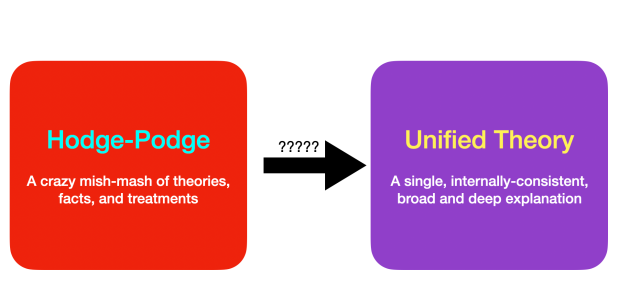
That partiality and cherry-picking is a huge, huge problem. It’s a problem in theory, and it’s a problem in practice. It’s a problem for anyone who ever wanted to be happy but couldn’t figure out how. If you click through the links above you’ll quickly see there is no clear connection between any one theory and any other. Each one is more or less siloed — if they weren’t, they wouldn’t deserve their own names. Collectively they are a hodge-podge. This hodge-podge is not a single coherent model but rather many — not an unum, but a pluribus. The hodge-podge is like a fish chowder — the kind where the cook, not knowing what to do with all the leftovers from the past week, shrugs and throws them all in.
I’ve been a psychiatrist for twenty years. I see patients forty hours a week. I see people who are suicidal (my speciality), depressed, schizophrenic, anxious and angry, obsessed and addicted. I see people with self-disorders, meaning they don’t know, and don’t like, who they are. I talk, I educate, I medicate, and in the course of a week the range of psychological ideas I have to draw upon can be head-spinning. As an end-user of the hodge-podge, I can’t afford to dogmatically hew to a single pure theory. I have to be pragmatic. If my patients are to stay alive and become happy I have to consider a huge range of treatments to find the one that words best for them.
The net result of this kind of pragmatic, ecumenical approach is that I have to serve chowder to my patients — different bites to different patients. Check out this spoonful of chowder that I served out to my eight patients yesterday. These are things I actually talked about, to real people who were paying for my advice, in one day:
- Serotonin
- The amygdala
- Electroshock therapy
- Rejection sensitivity
- The Oedipal complex
- Pavlovian conditioning (the dog with the bell experiment)
- Defense mechanisms
- Attentional load
- Predictive coding
- Psilocybin
Does that list look like all its items are drawn from a single, overarching, unified theory? I hope not. They aren’t. They weren’t.
As a psychiatrist I feel comfortable assuring you: this lack of a unified theory is a huge problem. When I give out advice, when I talk in talk therapy, when I write prescriptions, I feel like what I am: a guy rummaging around in a big bag of tricks.
Rummaging, people, is not the best we can do. Rummaging is like foraging. It’s like playing hide and seek. It’s a time-consuming, empirical, vaguely desperate approach to getting people better. And it’s not just psychiatrists who rummage. Arguably, because we’re so highly trained and have so much pattern recognition under our belts, we do less rummaging than most. Consider your personal rummaging over the past week or so. Odds are that, in an effort to manage your moods and have a good time, you’ve tried a random assortment of things in the hodge-podge. Coffee, tequila, a conversation with a friend, a confession to a priest, a psychiatric medication, a social media post, a Netflix binge, a Ted talk by some self-help guru, Tarrot cards, a vape pen.
Notice how random your searching has been. Was there not a strong element of happenstance in how you chose what to do when? You were foraging, not hunting, because you didn’t know what you were after. The hodge-podge had no road map. You have surely observed what we all have: that it’s not laid out not like New York with its numbered avenues and streets. It’s laid out like London. Have you been to London? With its spider-web of 25,000 streets? Have you met a cabbie who’s mastered The Knowledge? That city is nuts.

Rummaging is not cute. We aren’t casually sifting through shirts in a thrift store. In psychiatry people kill themselves — and sometimes others — for a lack of feeling better. For a lack of being okay. But because they are so often forced to rummage — for a therapist who gets them, for a medication that works, for a treatment plan that actually gets them — the same thing that happens in large thrift stores to patrons happens to them. There is so much to look through that the overwhelming odds are that they won’t have enough time to find what they need. Instead they are likely, if desperate, to just buy the first thing they see. They buy the crap in front of the store, on display, and never get the chance to see what’s in the back — which is often much better.
The sheer randomness of our beliefs about psychology — the randomness of having been born into a family, religion or culture that assumes that X is true about humans but Y is not — is an enormous problem. Most of us never get the chance to review other ideas, let alone hear ones that can explain the whole of the hodge-podge.
This problem affects whole societies — not just patients. Disputes over human nature, when they clash at the national or ethnic levels, can cause war. Think Confederacy versus Union in the American Civil War. Think Nazis versus Jews in 1930s Germany. Think communism versus democracy in Vietnam. Think Catholicism versus Protestantism in Ireland. All of those fights involved deep — and deeply flawed — theories about human psychology. About what human beings want. About what human beings are.
Even within single cultures undivided by war there is intense debate for and against particular elements of the hodge-podge. Advocates of any given element of the hodge-podge are often passionately enraged with another, taking one another as existential threats. For example, around the corner from where I used to live on the upper West Side of Manhattan, there used to be a sign reading “depression is a flaw in chemistry, not a flaw in character.”

Meanwhile, in perfect opposition to this notion, it is common to meet people who “don’t believe in psychiatric medicine.” The standard bearer for this attitude is Tom Cruise.
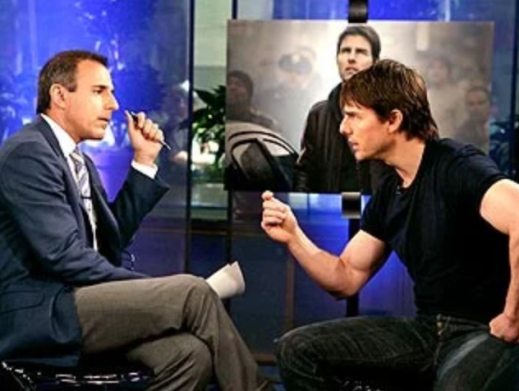
But Tom Cruise isn’t a one-off. There are Tom Cruises standing in every corner of the hodge-podge, arguing passionately against someone in some other corner. There are those who don’t believe in social forces, genes, free will, intentionality, and so on. There are even people — famous philosophers, no less — who don’t believe the mind even exists. And of course coming right back at them are those ontological idealists who believe that it’s the brain that doesn’t exist, and that mind is all there is. If you can think of a psychological concept — every one on my list above, to be sure, and every list like it — there is someone who is absolutely certain that it’s dead wrong.
All of this fighting is tragic. It’s completely unwanted. It makes therapists crazy and patients confused. It surely contributes to a huge amount of human suffering. And all of it is a byproduct of unwanted intellectual freedom — the freedom to believe whatever the hell one wants about how the brain and mind work.
As people have discovered since the dawn of time, despite some really good PR to the contrary, freedom isn’t always our friend. And this freedom isn’t helping us. This freedom is making us sad. In some cases it’s killing us.
It’s the same freedom that had our ancestors witch-burning and bloodletting and trepanating and phrenologizing and lobotomizing and “praying the gay away.” Some of these beliefs — like Tom Cruise’s — are merely amusingly foolish (how can anyone who’s ever gotten a blood test, the sole purpose of which is to measure blood levels of various chemical, believe there is “no such thing as a chemical imbalance?”). But some, like the idea that schizophrenics have been possessed by the devil and need to be burned to be saved, are frankly murderous.
It’s the freedom to believe whatever about the mind that’s causing the carnage. As we know from physics, too many degrees of freedom, and a vast, unchartable phase space, allow things to spin out of control. At present Tom Cruise et al are free to advocate whatever theory they like precisely because the hodge-podge is a hodge-podge. If this were a court case, Tom Cruise is just making an opening statement — and in opening statements you can say whatever you like.
2. e pluribus unum
The solution to the problem just stated is America’s democractic motto: e pluribus unum.
From pluribus — a profusion of psychological theories — we want unum. From many we want one. Like Haussmann reconceiving and then reconstructing Paris, we want to boil down the hodge-podge of theories into a single overarching one, broad and deep, that, as Ken Wilbur would put it, transcends and includes them. We want one theory, like Tolkien’s ring, to rule them all.
Unification — the e pluribus unum event — will produce an organized, rational way of thinking about the totality of facts that undergird a theory of mental experience. In the remainder of this first essay we’re going to explore why this future e pluribus unum event — this paradigm shift — is so important to push for. Hint: psychiatric patients, who are literally dying of misery, can’t wait.
We psychiatrists often feel jealous of our colleagues in other branches of medicine. How come they get one unified model of their organ of interest while we have this hodge-podgy stew for the brain? It’s not fair! Cardiologists have one model of the heart. They all agree on the main, fundamental thing it does, its purpose, of which all its little details (valves and vessels and chambers and electrical system) are just exemplars. The purpose of the heart is to pump. Likewise, pulmonologists have one model of the lung. They all agree too: it exchanges oxygen for carbon dioxide. And so on and so forth for all the main organs of the body, more or less.
But psychiatrists aren’t nearly so lucky. We can’t agree on the purpose of the brain — the underlying, fundamental goal of which its hundred billion neurons, zip-zapping electricity, tortuous sulci and gyri, and intricate connections are just manifestations. Now you might doubt this — you might say, for example, that “the purpose of the brain is to think.” Problem solved, right? But that leaves out feelings! So then you might say “oh right, okay the purpose of the brain is to feel,” but that leaves out action — your brain moves your body. We can go on like this of course, but it’s really never ending. Everything that the brain does — love, hate, fight, flee, judge, reason, feel, think, move — seems to be another purpose, and it quickly becomes apparent that you can’t say that one of these takes priority over the rest.
The end result of this little thought experiment is that where the heart has one purpose — to pump blood — and the lungs have one purpose — to exchange gas — the brain seems to have dozens of purposes. We know lots and lots of things it does — it feels! it wants! it thinks! it decides! it acts! — but we don’t know how all these things fit together into a single model.
We’ve made the best of it. Maybe the mind is more complicated than the heart or the lungs. Maybe collecting observations about what it does is the best we can do. And so we did. We collected observerations and threw them into the hodge-podge, and over the years it formed and grew.
This disorganized quality is a reflection of our inability, at present, to explain what the relationship between physical things like serotonin molecules and mental things like rejection sensitivity is (beyond mere correlation). That disorganization is not what you’d want in a theory about the mind. You’d want a theory about the mind and its relationship to the brain to be a nested hierarchy (like Russian Matryoshka dolls or a taxonomy of mammals). You’d want certain items in the list to be premised upon some and derivative of others.
The foregoing implies what the remainder of the website seeks to prove: that there more to be learned about mental experience. Maybe this is wrong. It’s plausible, I suppose, there is no more to be learned. It is plausible that we are at the end of human progress on the nature of mental experience. It is plausible that we have, intellectually, peaked. Perhaps, a thousand years from now people will look back and say “yep, that was it, after the 2020s we didn’t learn anything else about the mind.” Maybe we’re tapped out. Maybe we’ve got nothing left. Maybe, as Jack Nicholson said to a waiting room of psychiatric patients, this is as good as it gets.
But the odds are it isn’t. The odds are this isn’t as good as it gets. The odds are it gets better.
There’s something in psychology called the end-of-history illusion. There is something else in the philosophy of science called the pessimistic induction. Both of them get at the idea that the odds are low — very, very low — that we happen to be living at the time when there is nothing left to learn about any subject, scientific of otherwise. And that includes, obviously, the subject that’s our focus here: the nature of mental experience.
The premise of this website is that we are not at the end of intellectual history. Which means we are not at the end of learning about how the mind works. As we’ll see, one of the pillars — arguably the pillar — of the sustained argument presented here is predictive coding. And according to predictive coding you are never done thinking. You always have more to learn.
The hunch here is that in a thousand years, and probably much sooner, we’ll look back and think “yeesh, they sure hadn’t figured it all out back then in the early 2000s. Back then they had no idea.” Under this view, the current hodge-podge is not the final position for any field interested in the nature of human mentation. There is more work to be done.
No more data!
The work that remains to be done does not involve collecting more data. Let me repeat that, because in our data-crazed age it is common for people to assume that the answer to every important question involves the generation of…. you guessed it…. more data. If some data is good, the zeitgeist holds, then more data is better, and infinite data is best. But that’s not the zeitgeist here at neuroself, where we’ve noticed that too much data gets you data smog. Here at neuroself, actually, we tend to think that pursuing data is quixotic — e.g., wildly impractical. All the data in the world isn’t going to cure what ails us. We need theory. Theory is practical. Take that, zeitgeist!
So here goes again — and for mnemonic purposes let’s pretend Don Quixote said it himself.
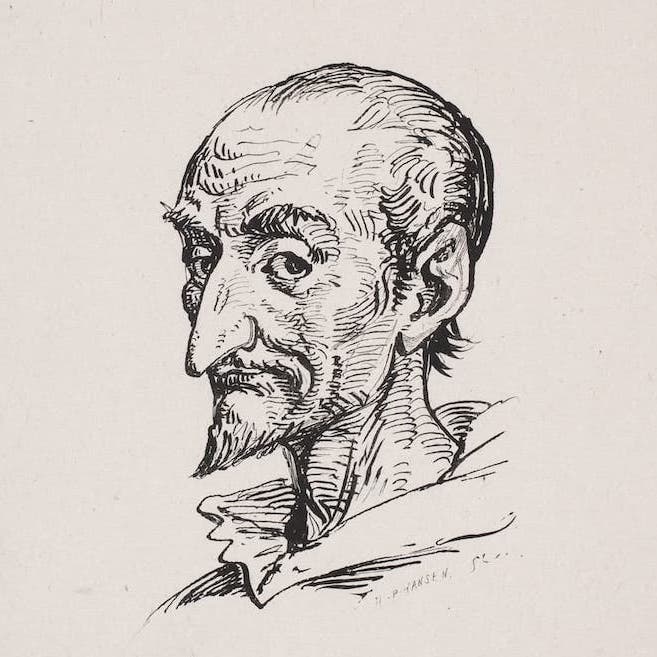
“I don’t want more data. I want theory!”
— Don Quixote
What we need instead of more data is theory. This is what a lot of us in academic psychiatry think needs to — and is going to — change in the coming decades. Frankly, it’s what a lot of us think is already changing. Actually, to be totally honest, it’s what a lot of us think has already changed.
We think there is a single, underlying, organizing principle — amazingly simple, by the way — that explains how all the items in the hodge-podge are conceptually connected to one another.
We think that the items are, for the most part, all going to stay with us for a long time. It is hard for us to imagine, for example, that there will ever be a time when thinking about serotonin, and defense mechanisms, and EEGs will not be useful. We don’t think these kinds of ideas are every going away. What we think is going to change is how we link them to one another in an overarching theory.
This website is dedicated to mapping out a first-draft of what that overarching theory is going to look like.
 neuroself